Eyes can tell stories words never will. When someone’s pupils are abnormally large, it can be a warning sign that something deeper is going on – possibly involving substance use. For friends, family, and even healthcare providers, noticing changes in the eyes can be a critical first clue.
In Arizona, substance use continues to be a serious public health challenge. According to recent data, 32.5% of Arizonians between the ages of 18-25 report having a substance-use disorder – and physical indicators, such as dilated pupils, often play a key role in early detection.
At Pinnacle Peak Recovery, we help individuals and families understand these signs, address the underlying causes, and work toward long-term recovery with compassion and evidence-based care.
The pupil is the black center of the eye, responsible for controlling how much light enters. Under normal circumstances, pupils shrink in bright light and expand in the dark. However, when drugs alter the body’s nervous system, this natural process can be disrupted – leading to pupils that remain unusually large regardless of lighting conditions.
Even small differences in pupil size can be telling. By observing changes over time and understanding the connection between the nervous system and the eyes, you can distinguish between normal physiological variation and possible substance influence. These insights allow families and caregivers to respond thoughtfully rather than react with alarm, providing the first step toward addressing underlying concerns safely and effectively.
In everyday lighting, most healthy adults have pupils about the size of a pencil eraser – roughly 2–4 millimeters across. In darker environments, they expand naturally to about 4–8 millimeters to let in more light. This shift happens automatically and is something most people never notice.
But when pupils stay unusually large in bright or well-lit settings, it’s a red flag that something may be stimulating the nervous system. This prolonged dilation isn’t just a quirk – it’s often the body’s involuntary reaction to certain drugs or medications. These substances can override the brain’s normal control over pupil size, keeping them wide long after they should have returned to normal. When paired with other physical or behavioral signs, consistently dilated pupils can be a key clue that something deeper is going on.
Spotting dilated pupils isn’t just about noticing size. It’s also about paying attention to patterns. It’s important to pay attention not only to size, but also to context and consistency. Pupils that remain unusually large in bright indoor lighting, or that change rapidly in ways that don’t match the environment, can be a warning sign that something is affecting the nervous system.
Behavioral clues often accompany dilated pupils, including:
Other subtle patterns may appear over time, such as:
Observing these patterns over time – rather than reacting to a single instance – can help you distinguish between normal variations in pupil size and potential signs of substance use. Paying close attention in a calm, nonjudgmental way ensures that your observations are accurate and that your responses remain supportive rather than punitive.
Taking notes or quietly tracking changes can also be useful if you need to share your concerns with a healthcare professional. By combining careful observation with compassion and understanding, you can be proactive in supporting a loved one while ensuring safety and encouraging early intervention if needed.

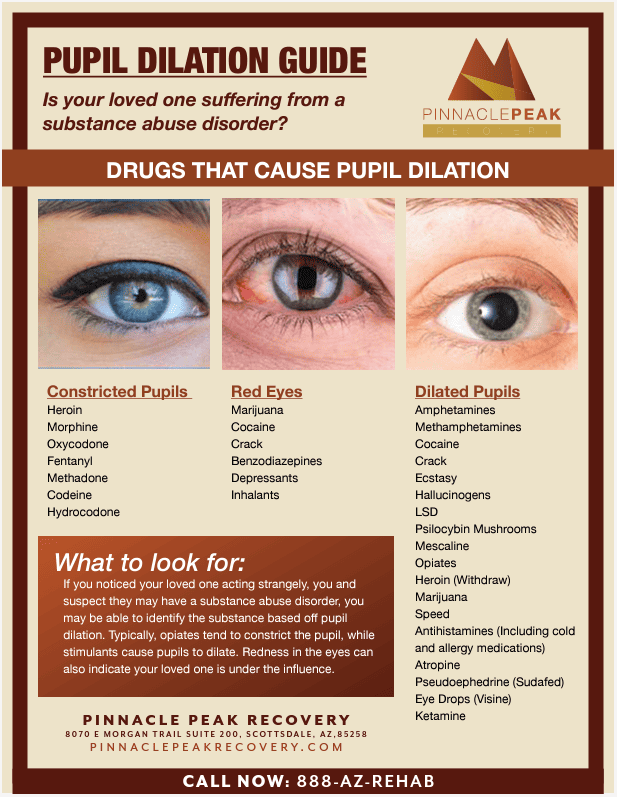
From stimulants to hallucinogens, many illicit drugs are known for causing pronounced pupil dilation. Recognizing these signs early can be a critical first step in identifying potential substance use.
These changes are rarely isolated. Dilated pupils often appear alongside elevated heart rate, increased blood pressure, heightened alertness, or other unusual behaviors. Recognizing this combination of physical and behavioral cues can help families and caregivers distinguish between normal variation and drug-related effects, allowing for timely and compassionate intervention.
Tracking patterns – such as repeated pupil dilation in specific situations or combined with mood swings, sleep disturbances, or social withdrawal – can provide critical insight. Documenting observations in a calm, nonjudgmental way ensures you have a clear picture before intervening or seeking professional support.
The human nervous system controls pupil size through a balance of signals that either tighten or relax the muscles in the eye. Drugs that stimulate the sympathetic nervous system – sometimes called the “fight or flight” system – tend to cause noticeable dilation. This physiological reaction can last for hours, and in some cases, even after the primary drug effects fade.
Understanding which substances cause this can help distinguish between drug-related dilation and other medical causes.
While illicit drugs are a well-known cause of enlarged pupils, certain prescription medications can have the same effect. This happens because some medicines stimulate the central nervous system or alter neurotransmitter activity, which can temporarily override the eyes’ normal light response.
Common prescription medications linked to pupil dilation include:
| Medication Type | Examples | Possible Effects on Pupils & Behavior |
|---|---|---|
| ADHD Stimulants | Adderall, Ritalin, Vyvanse | Can cause mild to noticeable dilation, increased focus, hyperactivity, or restlessness |
| Antidepressants | SSRIs (Prozac, Zoloft), SNRIs (Cymbalta, Effexor) | May lead to mild dilation, changes in mood, or restlessness, particularly when starting or adjusting dosage |
| Parkinson’s Medications | Levodopa, dopamine agonists | Can cause temporary dilation alongside improved motor activity or energy |
| Certain Antihistamines / Decongestants | Sudafed, some cold/allergy meds | Mild dilation, increased alertness, or jitteriness |
| Migraine Medications | Triptans | Occasionally cause temporary pupil enlargement, sometimes with visual disturbances or sensitivity to light |
The difference often comes down to dosage and context. When taken exactly as prescribed, these medications may cause only mild, short-term dilation that fades as the dose wears off. But misuse – such as taking higher-than-recommended amounts, mixing with alcohol, or combining with illicit drugs – can dramatically increase pupil size. In these cases, the effect is not only more visible but may signal dangerous overstimulation or other health risks.
Behavioral and physical clues to watch for include:
Even with legal medications, repeated or pronounced pupil dilation – especially when combined with other behavioral changes – can signal that the body is being overstimulated. Tracking these patterns over time allows caregivers to understand the bigger picture, identify potential misuse, and seek professional guidance before the situation escalates.
While pupil dilation alone doesn’t confirm addiction, it can be an important warning sign – especially when paired with other behavioral and physical changes. If someone’s eyes seem consistently enlarged, and they’re also showing mood swings, erratic sleep patterns, or unexplained bursts of energy, it may point toward substance use.
In these cases, seeking professional mental health or addiction support can make the difference between ongoing harm and a chance at recovery. Whether it’s starting a conversation, encouraging a medical evaluation, or connecting with treatment providers, taking action early can help prevent serious consequences.

When signs like dilated pupils point to something more serious, the right help can make all the difference.
Pinnacle Peak Recovery offers evidence-based, compassionate care tailored to each individual’s needs. From medical detox to outpatient therapy, our programs are designed to address not just the addiction, but the underlying factors that contribute to it.
Our experienced team provides more than treatment. We offer understanding, support, and a path forward. If you or someone you love is showing signs of substance use, don’t wait until it escalates. Reach out today at 866-377-4761 and learn how our mental health services and addiction treatment programs can help you reclaim your life.
Clinical Excellence | Compassionate Care | Family Feel